



Cracked nipples are one of the uncomfortable symptoms many women experience during breastfeeding. Although they are often considered a temporary difficulty of the early postpartum period, for some mothers the pain can become so severe that it significantly interferes with daily breastfeeding and affects their quality of life.
Alongside assessing breastfeeding technique, the baby's latch, positioning, and any local contributing factors, many women seek additional ways to support the healing process. Within an integrative approach, tissue care, adequate rest, social support, and individualized homeopathic treatment can all play an important role.
In homeopathy, cracked nipples are not viewed as a single condition for which there is one universal remedy. Attention is given to the character of the pain, the appearance of the fissures, the presence of inflammation or discharge, and the individual's overall characteristics. This is why different women with seemingly similar symptoms may benefit from different remedies.

Supporting the Mother Is an Important Part of Recovery
Following childbirth, the needs of the newborn naturally become the focus of family attention. However, the mother requires support as well.
Assistance from a partner and family members, support from a doula, community nurse, or lactation consultant, sufficient rest, nutritious food, and time spent outdoors can all have a significant influence on overall well-being and the body's capacity to heal. Regular hydration, nourishing meals, gentle movement, and small moments of rest help reduce stress. While such measures do not directly heal nipple fissures, they help create conditions in which the body can regenerate more effectively.
Homeopathic Remedies Commonly Considered for Cracked Nipples
The remedy descriptions in this article are based primarily on Dr. Manuel Mateu Ratera'sFirst Aid with Homeopathy" , one of the most comprehensive contemporary guides to homeopathic first aid and acute conditions.
Calendula officinalis
Calendula is one of the best-known homeopathic remedies for healing damaged tissue. It may be used locally as a 1% solution or taken orally in homeopathic potencies such as 15CH or 30CH for painful nipple fissures, particularly when healing is slow or there is a tendency toward infection. It may help reduce discomfort and support the body's natural tissue repair processes. In deeper or chronic fissures, however, other remedies may also need to be considered.

Castor equi
Castor equi is one of the classic remedies for intensely painful cracked nipples. Extreme sensitivity to touch is characteristic—even light contact with clothing may be difficult to tolerate. The nipples may bleed or ooze, the areola appears red, and the breast may be swollen and painful. Symptoms often worsen with any jarring movement of the body, such as walking downstairs. Intense itching is frequently present as well.
Graphites
Graphites may be considered when nipple fissures are associated with eczematous skin changes. The cracks often exude a thick, sticky, yellowish discharge resembling honey. The skin heals slowly, small blisters may be present, and there is often a tendency for the problem to recur. This remedy is frequently associated with individuals who tend toward overweight, are sensitive to cold, prone to constipation, and have chronic skin complaints.
Phytolacca
Phytolacca is one of the most important remedies for women prone to recurrent tonsillitis and breast inflammation, particularly mastitis with a tendency toward abscess formation. A characteristic feature is pain that radiates from the nipple deep into the breast or even throughout the body during nursing. The breasts are hard, sensitive, and painful with even the slightest movement.
Ratanhia
With this remedy, the intensity of the pain often seems disproportionate to the appearance of the fissure itself. It is particularly indicated when cracked nipples occur in women who also suffer from haemorrhoids or anal fissures. Intense burning pain is characteristic, along with the sensation of "broken glass" in the rectum.
When a Deeper Constitutional Picture Needs to Be Considered
Sometimes nipple fissures repeatedly recur, heal very slowly, or form part of a broader pattern of recurrent inflammation and skin problems. In such cases, a homeopath may consider constitutional remedies such as Causticum, Silicea, or Sulphur.
Causticum
The fissures are accompanied by burning, stinging, and a sensation of raw, denuded skin, as though the area had been exposed to alcohol. This remedy often corresponds to individuals who are highly compassionate, sensitive to injustice, and deeply affected by the suffering of others. They may be prone to anxiety, fears, and various chronic conditions affecting the skin and mucous membranes.
Silicea
Silicea is often considered when there is a tendency toward abscesses, fistulas, or chronic inflammations that are slow to resolve. The fissures tend to deepen and heal slowly. Constitutionally, these individuals are often gentle, conscientious, and perfectionistic, while easily becoming exhausted. Excessive sweating of the hands and feet, constipation, and brittle nails are commonly observed.
Fluoricum acidum
Fluoricum acidum shares some similarities with Silicea but has several distinguishing features. Fissures tend to reopen after appearing to have healed. There is often a general weakness of connective tissue, with a tendency toward fistulas, hard scars that repeatedly reopen, and problems affecting dental enamel.
Unlike individuals who benefit from Silicea, women requiring Fluoricum acidum often feel better in fresh air and from cold applications. Homeopathic Materia Medica also describes a strong desire for movement and outdoor activity. This remedy frequently corresponds to thinner, depleted individuals whose tissues seem unable to maintain long-term stability. Anxiety accompanied by perspiration and memory difficulties may also be present. They may appear indifferent toward family members and/or excessively preoccupied with themselves.
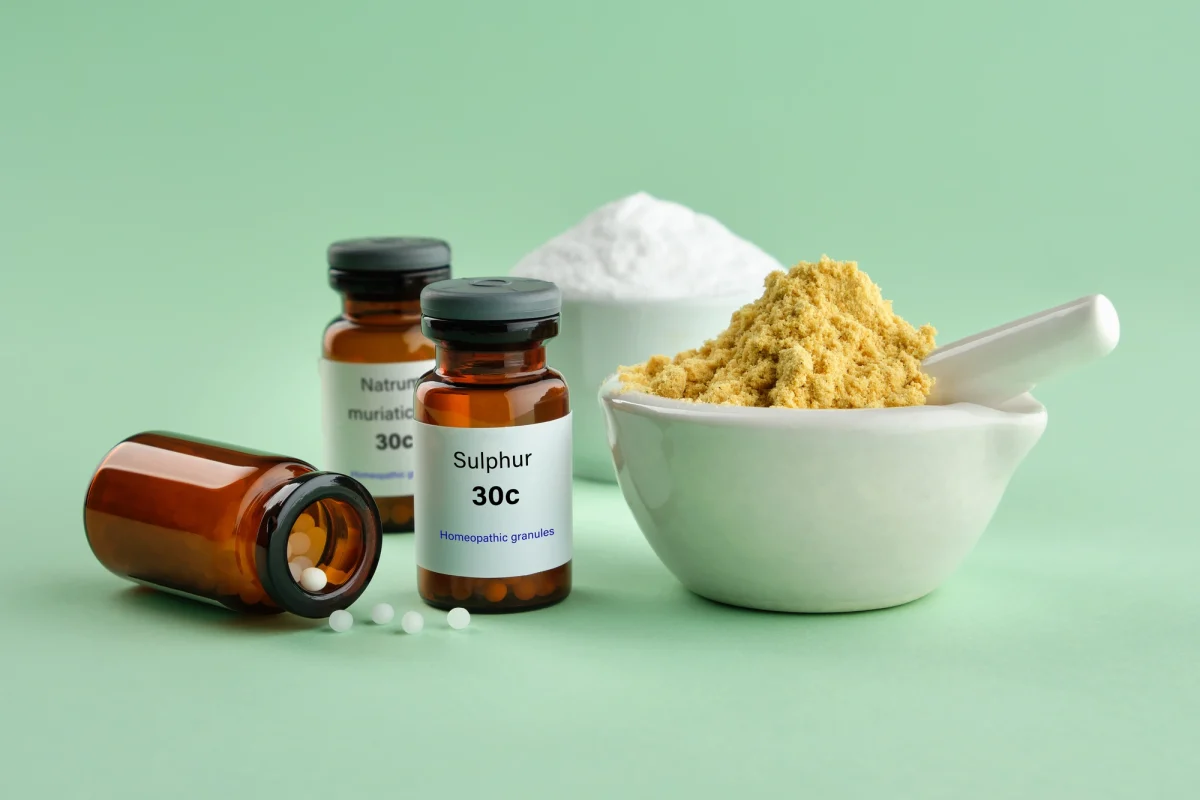
Sulphur
Sulphur is one of the most important remedies for conditions characterized by burning sensations. In cracked nipples, the pain and burning typically intensify after nursing and may continue even after the baby has finished feeding. Intense itching is often present, and some women develop inflammatory breast changes with redness extending outward from the nipple.
This remedy frequently corresponds to individuals with a warm constitution who perspire easily, experience increased thirst, and have a tendency toward various itchy and burning skin complaints.
Individualization as the Foundation of the Homeopathic Approach
Cracked nipples may appear almost identical on clinical examination, yet the experience of the condition is often highly individual. Some women primarily describe burning, stinging, or shooting pain during breastfeeding, while others struggle with extreme sensitivity to touch, recurrent mastitis, or slow healing of damaged tissue. In some cases, symptoms improve relatively quickly, whereas in others they repeatedly return despite appropriate measures.
Such differences suggest that the same diagnosis may reflect different symptom patterns and different ways in which the body responds to stress. For this reason, the homeopathic approach does not focus solely on the local tissue change but seeks to understand the individual's overall picture—including the nature of the pain, factors that aggravate or relieve symptoms, susceptibility to inflammatory processes, healing capacity, and broader physical and emotional characteristics.
The goal of this approach is to select a treatment that corresponds as closely as possible to each woman's unique symptom pattern.
Final Thoughts
The information presented in this article may serve as a guide to understanding different patterns of cracked nipples and the homeopathic remedies traditionally associated with them. However, when symptoms are severe, persistent, or frequently recurrent, individualized homeopathic consultation often allows for a more precise remedy selection and a more comprehensive approach to recovery.
Equally important as selecting an appropriate remedy are adequate rest, nutritious food, proper hydration, emotional support, and professional assistance whenever needed.
If fever, marked breast redness, severe pain, purulent discharge, or signs suggestive of mastitis or breast abscess develop, prompt medical attention should be sought.
In such situations, homeopathy may serve as a valuable component of an integrative approach alongside conventional medical care, with the aim of supporting natural healing processes and safeguarding the well-being of both mother and child.

Literature
Mateu Ratera, M. (2020). First Aid with Homeopathy: The Ultimate Medical Guide for Travellers and Athletes, Also Covering Work-Related Accidents and Major Disasters. Kandern, Germany: Narayana Verlag.