



Introduction
Pain is a highly complex human experience and the most common reason for seeking medical care. In contemporary society, characterized by an accelerated pace of life and expectations of rapid results, patients often turn to solutions that provide only immediate relief.
Modern research points to several adverse effects associated with the use of analgesics: opioids cause tolerance, dependence, and respiratory disorders (1), while non-steroidal anti-inflammatory drugs increase the risk of gastrointestinal and renal complications (2). Even short-term postoperative use may lead to harmful effects (3), particularly in individuals with chronic illnesses (4).
Although conventional medicine incorporates thorough diagnostics and analytical understanding of disease causes, its approach to pain is primarily based on biological mechanisms. Homeopathy, by contrast, starts from a dynamic concept of the human being, in which pain is viewed not merely as a physiological symptom, but as an expression of a disturbance of overall vital balance: pain is not just something to be eliminated, but a signal indicating disrupted harmony and a stimulus for the body to restore balance.

In the article Homeopathy for Pain Management by Burke Lennihan, published in Advances in Complementary & Alternative Medicine in 2017, contemporary research on the role of homeopathy in the treatment of various types of pain is presented. Individualized homeopathic remedies are shown not only to alleviate pain but also to improve quality of life and reduce the need for analgesics, with a high level of safety (5).
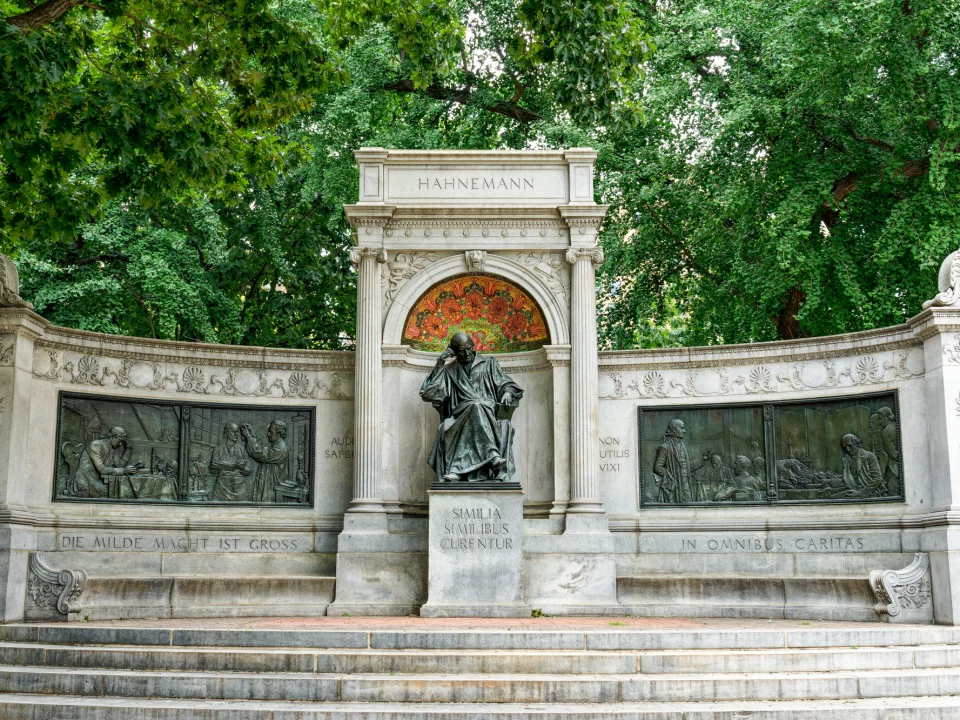
These conclusions reflect the teachings of the classical masters of homeopathy—Hahnemann, Hering, and others—who as early as the 19th century scientifically elaborated and postulated the millennia-old philosophical framework of homeopathy, in which pain, like other symptoms of a diseased organism, is viewed as part of a natural process of self-regulation. Today, their principles are increasingly finding confirmation in modern scientific research.
Hahnemann: Pain as an Expression of Disturbed Vital Force
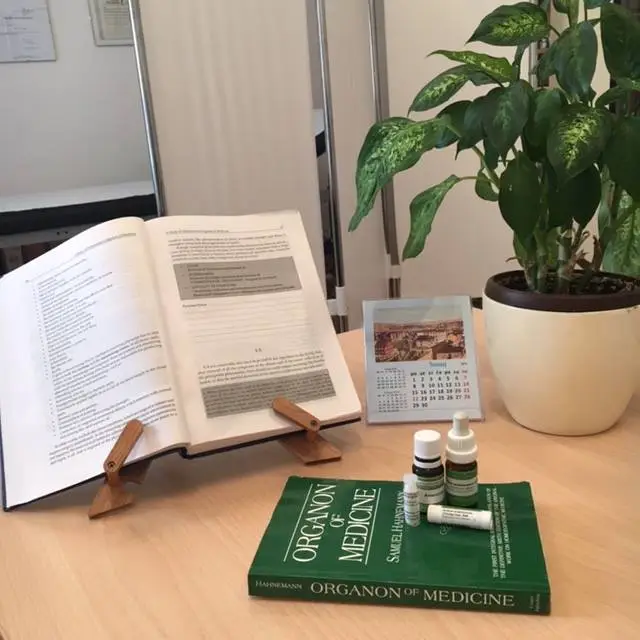
In the Organon of the Healing Art, Hahnemann defines health as the harmonious operation of the vital force that maintains body and mind in balance (“admirable, harmonious, vital operation, as regards both sensations and functions,” Org. §9), while disease is described as a disturbance of that same force, which can be perceived only through symptoms (“its morbid derangement only makes itself known by the manifestation of disease in the sensations and functions… by morbid symptoms,” Org. §11). In concise terms, according to Hahnemann, health is the harmony of the vital force coordinating body, mind, and emotions, while disease is a state of imbalance manifested through symptoms. (6)
Treatment, according to his teaching, must be individualized: there is no universal “remedy for pain,” but rather a remedy that corresponds to the totality of the person—physical, emotional, and mental.
Hering and Vijayakar: Direction of Cure and the Dynamics of Pain
Constantine Hering (7) formulated the so-called “law of order” or “law of the direction of cure,” according to which improvement proceeds from above downward, from within outward, from more vital organs to less vital ones, and in the reverse order of symptom appearance (8).
In one of his frequently cited passages, he writes approximately: “Every homoeopathic physician must have observed that the improvement of pain goes from above downward, and the improvement of disease from within outward. Hence chronic diseases, when truly cured, always end in some form of skin eruption, differing according to the various constitutions of the patients…” (9)
In practice, this means that during recovery pain may temporarily change—become milder, shift location, or assume a different character. Such changes, which in conventional medicine might appear as an “unstable course of disease,” are viewed by the homeopath as signs of reorganization of the vital force.
According to Hering, however, the body does not recover randomly during the healing process but follows a specific order. Disturbances in the center of the body and vital organs subside first, after which improvement gradually “spreads” outward and downward, with symptoms disappearing in the reverse order of their appearance. In practice, this direction often helps determine whether treatment is progressing in the right direction.

Prafull Vijayakar (10)—a contemporary homeopath—suggests that Hering’s “law of the direction of cure” should not be understood merely as a (theoretical) rule empirically postulated by Hering, but rather viewed through the lens of natural human development in the womb: he compares it to embryological development, reminding us that the human body in the embryonic stage is built from within outward, beginning with the most vital systems and ending at the surface. The human organism develops in utero according to a predetermined, precisely ordered, and highly logical sequence: from the initial cell arise layers (ectoderm, endoderm, mesoderm, neuroectoderm) from which skin, internal organs, connective tissues, the nervous system, and the brain are formed. This development proceeds from the head downward, from within outward, and from more vital to less vital organs.

Vijayakar states that if the body is built in this way, then true healing occurs in the reverse direction (i.e., moving “backward” along the continuum from disease toward health), but according to the same logic—first the deeper, vital systems are restored, and only later the skin and periphery. He therefore uses his embryological model as a sophisticated explanation of Hering’s direction of cure and as a practical tool for understanding suppression and miasmatic aggravation.
Taken together, Hering’s law describes how the body returns to balance, while Vijayakar explains why this direction makes sense: because it follows the natural logic by which the body is constructed and maintained throughout life (11).
Kent: A Holistic Approach and the Emotional Dimension of Pain
James Tyler Kent (12), author "of Lectures on Homoeopathic Philosophy" , explained the ideas of his predecessors—namely disease as a non-local phenomenon—from a slightly different perspective.
Kent clearly distinguishes the sick person from disease as a “tissue finding” and holds that it is the physician’s duty “to set in order the interior of the economy, that is, the will and understanding together,” while changes in tissues are merely “results of disease, not the disease itself” . He emphasizes the central role of the psyche, echoing Hahnemann’s idea that “the mind is the key to the man,” and adds that mental symptoms are the most important symptoms of both disease and remedy. Kent defines the human being through inner processes: “man is what he thinks and what he loves”. Thus, the homeopath does not seek a “remedy for pain,” but a “remedy for the person who experiences pain” (13).
It could be said that Kent’s way of thinking anticipates some of the key ideas of the biopsychosocial model of disease later articulated by Engel. Although Engel explicitly formulated the biopsychosocial model only in 1977 (14), Kent’s emphasis on the inseparability of physical, mental, and emotional dimensions of the human being can be seen as a historical precursor of this approach within the homeopathic tradition.
In the study by Elavarasan et al., 2023 (15), it was emphasized that homeopathy can contribute to the reduction of chronic pain: “Homeopathy offers a non-invasive and gentle approach to the management of chronic pain. Its purpose is to address the underlying causes of pain rather than merely suppress symptoms. Homeopathy views the individual as a whole… taking into account physical, mental, and emotional aspects… with the aim of restoring overall balance” (15A).
Such findings open space for an integrative model of treatment in which homeopathy—with its very concrete and practical patient-centered approach and its rich homeopathic pharmacopoeia (16) on the one hand, and its well-established philosophy grounded in natural laws on the other—complements the biomedical model, thus offering patients a more sustainable approach to treatment, that is, to the restoration of health.
Contemporary Research and Classical Principles
If we seek the practical implications of these theoretical and philosophical insights within the body of available contemporary scientific research, the Homeopathy Research Institute (HRI) is an appropriate place to look. Patients undergoing homeopathic treatment for chronic pain, headaches, dysmenorrhea, or lower back pain report not only a reduced need for analgesics but also a significant improvement in quality of life (17, 17A, 17B, 17C). These “real-world” data support the philosophical foundations laid by the classical masters of homeopathy in a modern context.
Furthermore, the EPI3 program from 2011 (18) - a large French epidemiological study—also demonstrated that patients using homeopathy consumed fewer non-steroidal anti-inflammatory drugs (NSAIDs) and experienced fewer adverse effects, while achieving comparable effectiveness in the control of musculoskeletal pain compared to conventional approaches.
All these findings lead to the realization that homeopathy has a well-deserved place in contemporary integrative pain management, which, unfortunately, has not yet been fully recognized or utilized. Homeopathy helps the organism restore its own rhythm and capacity for self-regulation, which in practice translates into a better quality of life. Equally important is the reduction in pharmacological burden while maintaining or improving clinical outcomes — an aspect of relevance not only for individual health but also for alleviating the costs borne by public healthcare systems.
Conclusion
Homeopathy offers an approach to pain that differs from the conventional medical model, although both aim to relieve pain safely and as quickly as possible and to free the patient from suffering.
Contemporary research indicates that homeopathy homeopathy can have measurable effects in pain management: reduction of pain and improvement of quality of life, , decreased reliance on conventional analgesics, and strengthening of emotional stability and self-regulation. Homeopathy can therefore be regarded as a safe and effective complementary therapy in pain management—one that does not exclude conventional medical care but enriches it.
Finally, it is important to emphasize that in cases of sudden and intense pain—such as after trauma, suspected fractures, acute abdominal conditions, or cardiac or neurological symptoms— timely medical attention is essential. Alongside standard conventional care, homeopathy, which is practiced worldwide today (19), may represent a valuable complementary option on the path toward more comprehensive patient recovery.
References
1. Paul AK, Thadathil N, Thomas R, Kumbolath S. Opioid analgesia and opioid-induced adverse effects. Pharmaceuticals. 2021; 14(11):1091. Available from: https://www.mdpi.com/1424-8247/14/11/1091
2. Alorfi NM. Pharmacological methods of pain management: Narrative review of medication-based analgesic strategies. International Journal of General Medicine. 2023; 16:4837–4850. Available from: https://www.dovepress.com/pharmacological-methods-of-pain-management-narrative-review-of-medicat-peer-reviewed-fulltext-article-IJGM
3. Bicket MC, D’Souza RS, Hasoon J, Ramanujam S. Comparing analgesic regimen effectiveness and safety in postoperative pain. BMJ Open. 2025; 15(4):e099925. Available from: https://bmjopen.bmj.com/content/15/4/e099925
4. Grant CH, Marsh K, Patel P, Tan YL, Liu Y, Bonomo L, et al. Multimorbidity and analgesic-related harms: A systematic review. BMC Medicine. 2025;23:177. Available from: https://pmc.ncbi.nlm.nih.gov/articles/PMC12106897/
5. Lennihan B. Homeopathy for pain management. Advances in Complementary & Alternative Medicine. 2017; 1(4):ACAM.000518. Available from: https://www.liebertpub.com/doi/full/10.1089/act.2017.29129.ble
6. Hahnemann S., Organon of the Healing Art, 6th ed., translated by W. Boericke. New Delhi: B. Jain Publishers; §§9, 11. (Note: In §9 the vital force is described as the principle maintaining harmony of sensations and functions, while §11 states that disturbance of the vital force is recognizable only through symptoms.) Available from: https://drcherylkasdorf.com/wp-content/uploads/2017/01/Organon-of-Medicine-6th-edition.pdf
7. Saxon W. Constantine Hering. In: Immigrant Entrepreneurship: German-American Business Biographies, 1720–1920. Available from: https://www.immigrantentrepreneurship.org/entries/constantine-hering/
8. Hering C. “Preface.” In: Hahnemann S. The Chronic Diseases, Their Specific Nature and Homoeopathic Treatment, Vol. 1. Translated by C. J. Hempel. New York: William Radde; 1845:7–8; and Hering C. “Hahnemann’s Three Rules Concerning the Rank of Symptoms.” Hahnemannian Monthly . 1865; 1(1):5–12.
9. Hering C. “Preface” (excerpt from the essay Guide to the Progressive Development of Homoeopathy), included in the first American edition of Hahnemann’s
The Chronic Diseases, Their Specific Nature and Homoeopathic Treatment, Vol. 1. New York: William Radde; 1845:7–8. upload.wikimedia.org
10. Yasgur J. In Memoriam: Dr. med. Prafull Gajanan Vijayakar (August 4, 1952 – December 17, 2020). American Journal of Homeopathic Medicine. Summer 2021. Available from: https://homeopathyusa.org/ajhm/in-memoriam-dr-med-prafull-gajanan-vijayakar/. Accessed December 8, 2025.
11. D’Souza L. Hering’s law of direction of cure: A reliable tool in homeopathic therapeutics. Available from
https://www.academia.edu/35272700/Herings_Law_of_Direction_of_Cure_A_Reliable_Tool_in_Homeopathic_Therapeutics
12. Kent JT. Lectures on Homoeopathic Philosophy. Calcutta: Paul, Medico; or New Delhi: B. Jain (reprint edition), Lecture I: “The Sick.”
13. Young S. Kent, James Tyler (1849–1916). Hahnemann House (Homeopathy UK – Hahnemann House Trust). Available from: https://www.hahnemannhouse.org/james-tyler-kent-and-homeopathy/. Accessed December 8, 2025.
14. Engel GL. The need for a new medical model: A challenge for biomedicine. Science. 1977; 196(4286):129–136. doi:10.1126/science.847460
15. and 15. A. Elavarasan S, Umesh Mohan CS, Preena Jane J, et al. Exploring the role of homeopathy in chronic pain management: A mini review. European Chemical Bulletin . 2023; 12 (Special Issue 5):5119–5124, especially p. 5121. doi:10.48047/ecb/2023.12.si5a.0426
16. Examples of official homeopathic pharmacopoeias include: the Homöopathisches Arzneibuch / German Homoeopathic Pharmacopoeia (HAB/GHP), online edition available via Deutscher Apotheker Verlag (https://www.deutscher-apotheker-verlag.de/german-homoeopathic-pharmacopoeia-online); the Homeopathic Pharmacopoeia of the United States (HPUS), the official compendium for homeopathic medicines in the United States (https://www.hpus.com/); and the Homoeopathic Pharmacopoeia of India (HPI), the official Indian standards for homeopathic medicines published by the Ministry of Health and Family Welfare (introduction and selected volumes available at: https://www.pcimh.gov.in/).
17. Homeopathy Research Institute. Status of Homeopathy Research: From Experimental Research to Clinical Evidence. London: HRI; 2024. Available from: https://www.hri-research.org/wp-content/uploads/2025/04/HRI_EvidenceSummary_2024.pdf
17A. Witt CM, Lüdtke R, Willich SN. Homeopathic treatment of patients with chronic low back pain: A prospective observational study with 2 years’ follow-up. Clinical Journal of Pain. 2009; 25(4):334–339. Available from: https://pubmed.ncbi.nlm.nih.gov/19590483/
17B. Muscari-Tomaioli G, Allegri F, Miani A, Bellavite P, Signorini A, Neri R. Observational study of quality of life in patients with headache receiving homeopathic treatment. Homeopathy. 2001; 90(4):189–193. Available from: https://pubmed.ncbi.nlm.nih.gov/11680803/
17C. Homeopathy Research Institute. Randomised controlled trials data update 2021 [Internet]. 2022 May 4 [cited December 4, 2025]. Available from: https://www.hri-research.org/2022/05/randomised-controlled-trials-data-update-2021/
18. Grimaldi-Bensda L, Bégaud B, Rossignol M, Avouac B, Lert F, Rouillon F, et al. Homeopathic medical practice for musculoskeletal disorders in France: Cohort study based on the EPI3 population. Pharmacoepidemiology and Drug Safety. 2011; 20(10):1093–1101. Available from: https://pubmed.ncbi.nlm.nih.gov/21887822/
19. Homeopathy Research Institute. Use of homeopathy across the world [Internet]. [cited December 4, 2025]. Available from: https://www.hri-research.org/resources/essentialevidence/use-of-homeopathy-across-the-world/